
If you’re wondering when your daughter needs her first deodorant, you’re not alone.
Periods, hormones, and mood swings get all the glory and talk time when it comes to girl puberty. They’re obviously important and deserve attention, but there’s a conversation we should be having that comes way before those days. Maybe even before you realize you should be talking about it.
It’s something my 7½ year old daughter and I have been exploring lately. Deodorant. She’s been really curious about it and asked me if we could get her some. I didn’t think she was ready for it, but when I did a pit sniff check, I realized we’re pretty much there. She’s not stinky yet, but I could tell that her smell is changing from the kiddo sweat smell to a puberty girl smell. And with the warmer weather coming, it was time.
So we did what any curious puberty mom and daughter duo does. We went to Target and started exploring.
What I found surprised me, and I think it might surprise you too. There is a lot more to think about when buying your daughter her first deodorant than just picking the one with the prettiest packaging. So let’s talk about it, before you find yourself standing in the deodorant aisle at 9pm with no idea where to start.
When to Know It’s Time for Her First Deodorant
Body odor is one of the first signs of puberty in girls, and you might start to notice it when your daughter is somewhere between 7 and 13 years old. Every girl develops on her own timeline, and using deodorant is not a requirement. It’s a personal choice.
There are a few things that might tell you it’s time. Strong body odor is an obvious one. Increased sweating is another. But sometimes, like with my daughter, she simply gets curious and wants to try it. That curiosity is worth honoring. It’s actually a great opening for a conversation.
I asked Certified Pediatric Nurse Kiara DeWitt, a full-time pediatric RN and lead neurology and neuroscience educator at Cook Children’s Medical Center, what she recommends for a girl’s first deodorant. She urges parents to reach for a deodorant instead of an antiperspirant during this time, because children are still developing and need sweat to help regulate body temperature.
One important note: if you notice body odor before age 7, it’s worth reaching out to your pediatrician or healthcare provider to make sure your daughter isn’t experiencing precocious puberty. And if the sweating or odor feels excessive or is affecting her confidence, a good doctor can help figure out what’s going on. Excessive sweating or bad body odor can really do a number on a girl’s self-esteem. Ask me how I know.
What to Look for in a First Deodorant for Girls
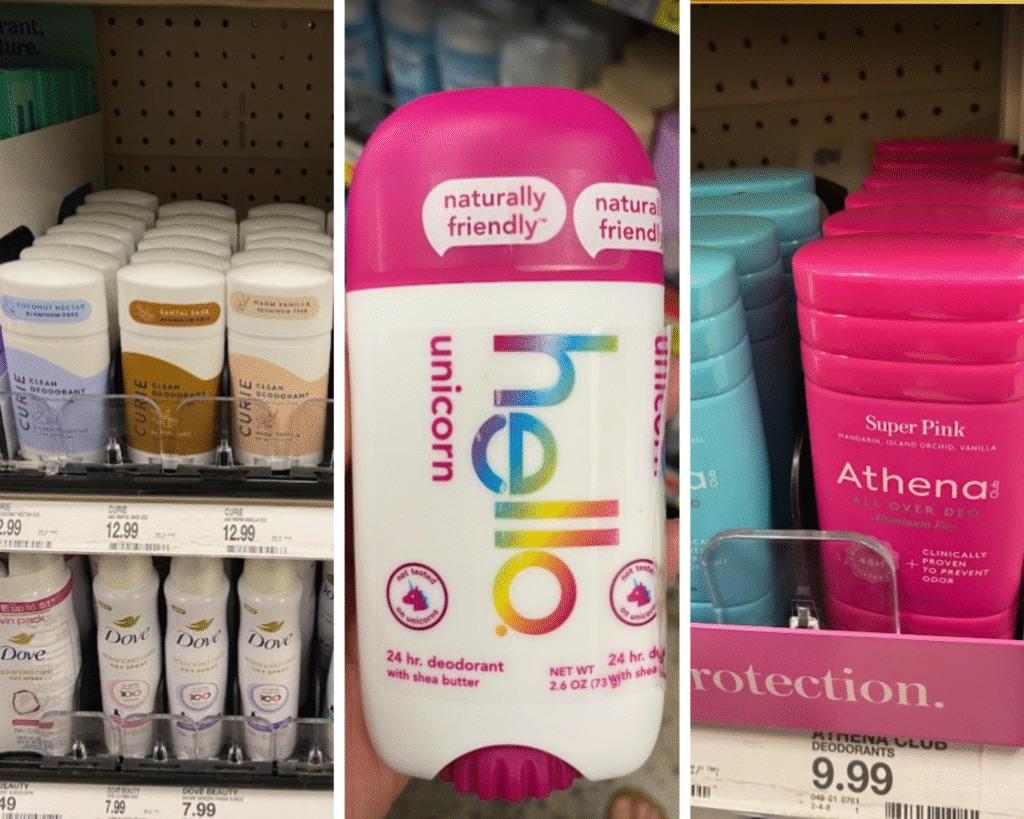
My daughter and I are always scoping out new puberty-related products at Target (you can check out my Wild brand deodorant review), so we headed to the deodorant aisle together. What I found was a lot of options, a lot of promises, and a lot of ingredients I couldn’t pronounce.
My phone is full of photos of products I’ve picked up just to check the labels. Some have amazing packaging. Some make amazing claims. But how do you actually know what’s best for your girl?
It’s easy to go overboard on the research and scare yourself right out of buying anything at all. Before you spiral into panic, here’s what DeWitt recommends looking out for and looking for.
Ingredients to avoid:
Aluminum compounds, specifically aluminum chlorohydrate and aluminum zirconium, are the ingredients found in most antiperspirants. Parabens, phthalates, triclosan, and synthetic scents are also worth avoiding, as some research supports their potential as endocrine disruptors. Propylene glycol and certain dye ingredients can also irritate sensitive skin.
Ingredients that are worry-free:
Look for aluminum-free formulas that don’t contain baking soda. Magnesium hydroxide, zinc ricinoleate, arrowroot powder, and coconut oil blends are typical ingredients that DeWitt considers safe. Some girls love mineral salt crystal deodorants too, which are a great natural option.
Her general rule of thumb: look for products with 10 ingredients or less that you can actually recognize. Less is more.
DeWitt also recommends doing a patch test before your daughter starts wearing a new deodorant regularly. Put a small amount on the inside of her elbow and wait 24 to 48 hours to make sure there’s no reaction. Natural deodorants typically run between $6 and $15 a stick, so it’s worth testing before she commits to wearing it every day.
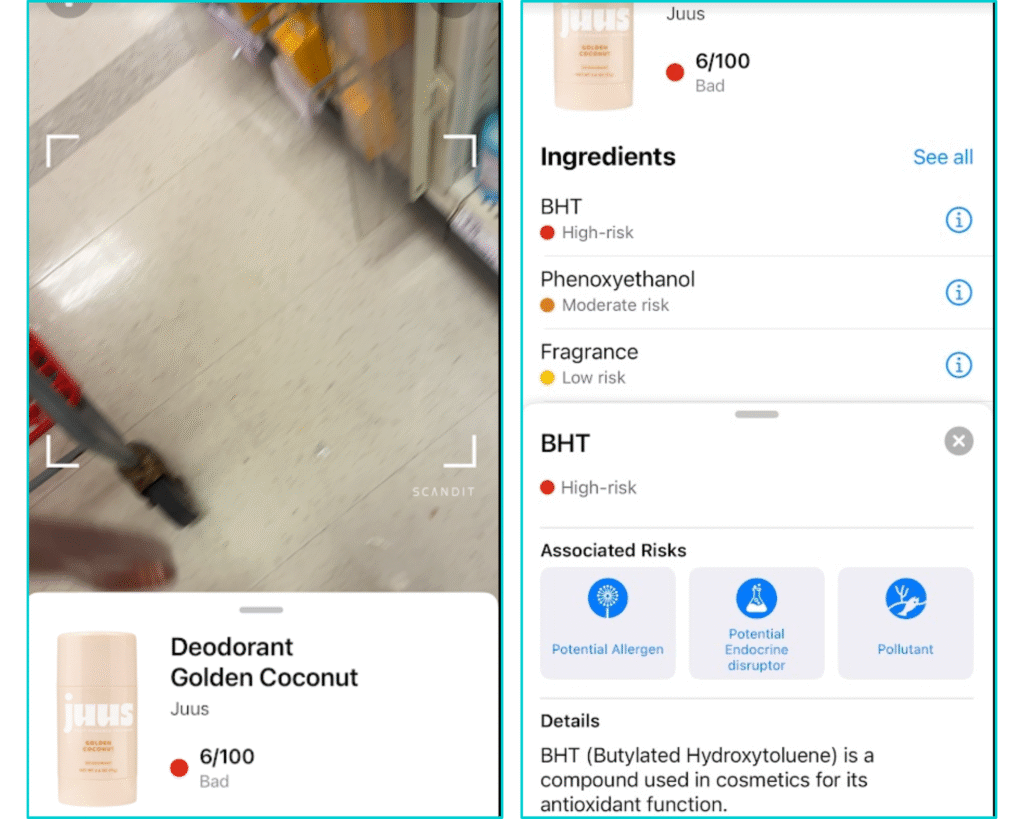
Be wary when exploring different brands. “Aluminum free” is prominently highlighted on most packaging, but that doesn’t automatically make it safe. For example, I just saw found a new brand featured at Target today. It’s Aluminum free, but it has BHT (Butylated Dydroxytoluene) which is an ingredient with potential endocrine-disrupting effects. BHT can affect thyroid function, sex hormones, fertility and development. This brand also has Phenoxyethanol which is also a potential endocrine disruptor.
Why does any of this matter at this age?
DeWitt explains it this way: girls can start experiencing puberty as young as 7 or 8. Endocrine disruptors are chemicals that act like hormones or block hormones in the body. Your skin absorbs a lot of what you put on it, and your underarms actually have a higher absorption rate than most other areas because the skin there is thinner. While most cosmetic ingredients only penetrate the skin at low rates, it’s worth being thoughtful about what goes on your daughter’s body during this window. As DeWitt puts it, moms who put in the effort to use a safe deodorant during this time could potentially give their daughter the edge she needs.
A Puberty Hack Worth Knowing
Before you spend an hour reading ingredient labels in the aisle, download the Yuka app. It’s free, and you can scan any product to get an instant rating based on its ingredients. I use it every time I’m shopping for health and hygiene products for my daughter. It takes the guesswork out completely and makes the whole process a lot less overwhelming.
Here’s a sample using that new brand I found at Target:
Starting the Conversation About Her First Deodorant
Here’s the part no one really talks about
The deodorant conversation can be tender and tricky. Some girls are embarrassed, some are being teased, some aren’t ready to acknowledge that their body is changing. Meeting your daughter where she is is key to starting the conversation. You don’t have to sit her down for a big talk though. Keep it light and low pressure. The goal isn’t to get her to wear deodorant today. The goal is to keep the door open.
If she’s resistant, or if she’s starting to have body odor but doesn’t want to wear deodorant yet, try not to make it a power struggle. If she’s curious, follow that curiosity. Ask her what she thinks smells good. Let her pick something she likes. That small moment of choice and autonomy goes a long way.
One More Thing
My daughter could not be more different from me when it comes to puberty. I avoided talking about it and buried myself in shame and anxiety. My own experience was rough, and it took me a long time to untangle all of that.
But I’m breaking the cycle with her.
Talking about puberty can feel awkward, especially if you wait until she’s already in the middle of it before starting the conversation. Talking early and talking often has been a game changer in our house. It’s setting my daughter up to understand and even befriend her changing body, instead of hiding from it.
The deodorant conversation is small. But it opens a door. And that door matters more than you might think right now.
Download the Free Puberty Product Tracker
Not sure where to start with puberty products? I put together a free tracker you and your daughter can use to keep notes on everything you try, what works, what doesn’t, and what she actually likes. Grab it here.
And if you want more support as you navigate this season with your daughter, the Real Girl Puberty membership was built for exactly this moment. Link below.
Kiara DeWitt, RN, CPN is a Certified Pediatric Nurse, full-time pediatric RN, and lead neurology and neuroscience educator at Cook Children’s Medical Center with over 10 years of experience in pediatrics.